

What Does the Gartner 2025 AI SOC Agents Report Reveal?
AI SOC agents have matured from experimental concept to practical adoption. These AI-driven systems augment human analysts by handling repetitive tasks like triage, enrichment, and reporting so security teams can scale operations without adding headcount. The core finding: augmentation beats automation.
We feel the release of Gartner Innovation Insight: AI SOC Agents (October 2025) marks an important milestone for security operations. It signals that the concept of the AI SOC agent, once seen as an experimental idea, is now entering a stage of practical maturity.
AI SOC agents are AI-driven technologies designed to assist human analysts. Key characteristics include:
- Augmentation focus - Designed to enhance human expertise, not replace it
- Task automation - Handle repetitive and data-intensive work across the SOC
- Analyst enablement - Free analysts to focus on investigation, decision-making, and strategic defense
This distinction between augmentation and automation is central to Gartner framing. The research makes clear that AI SOC agents are not a shortcut to an autonomous SOC, but a way to scale human capability in an environment where alert overload and talent shortages have become the norm. In essence, these agents act as digital teammates: continuously learning, reasoning through complex data, and surfacing actionable insights that help analysts work faster and smarter.
Dropzone AI is listed as a Representative Provider for AI SOC agents in the Gartner report, which we see as validation of what our customers have already proven in practice. The inclusion of AI SOC agents in the Gartner research, we feel, reflects a broader industry shift toward trusting AI as a force multiplier for human-led security operations. It shows that the market is ready not for machines to take over but for AI systems that strengthen and extend the work of skilled analysts, making security operations more efficient, resilient, and sustainable.
Why Are AI SOC Agents Gaining Momentum in Security Operations?
In our opinion, the Gartner research highlights why AI SOC agents are gaining momentum as a transformative force in security operations. The report describes a rapidly emerging market, populated by both established cybersecurity vendors and a growing wave of startups eager to solve the same problem: the persistent imbalance between the number of alerts and the number of people available to investigate them. This surge in innovation is driven by necessity. Security leaders are under constant pressure to do more with limited staff and finite budgets, and AI is quickly becoming the most practical path toward scaling operations without scaling headcount.
Within this new market, Gartner identifies two main approaches to AI SOC agent design. Some vendors on full automation, developing systems that aim to handle entire workflows with minimal human input. Others build AI specifically to augment existing teams, blending reasoning, adaptability, and transparency into the analyst workflow.
The Gartner findings, we think, also underscore that today's AI SOC agents are not substitutes for human analysts. Instead, they strengthen core SOC functions by adding consistency, speed, and deeper context:
- Alert triage. Faster initial assessment and prioritization of incoming alerts
- Investigation. Deeper analysis with automated enrichment and correlation
- Threat hunting. Proactive detection powered by contextual intelligence
- Reporting. Consistent, comprehensive documentation across all cases
AI SOC agents assist analysts by improving triage, enrichment, contextualization, and reporting tasks, allowing them to focus on higher-value activities. AI doesn't eliminate the human element of cybersecurity; it enhances it. For SOC leaders struggling to balance efficiency and accuracy, the Gartner evaluation confirms that AI SOC agents represent a pragmatic, human-centered evolution in how modern security operations are run.
How Do AI SOC Agents Work Within the SOC?
AI SOC agents act as the connective layer within the SOC, bridging analysts, data sources, and security tools to create more efficient and adaptive workflows. In Figure 1 of the report, Gartner illustrates how these agents interact with security infrastructure through APIs and integrations:
- EDR platforms
- SIEM systems
- XDR solutions
- Identity platforms
- Threat intelligence feeds
This connectivity enables the AI to gather, enrich, and correlate information from multiple sources, then return decision-ready insights that help analysts act faster and with greater confidence.
Within this structure, AI SOC agents deliver the most value in five core functions:
- Detection engineering. Improving rule quality and reducing false positives
- Alert enhancement. Adding context and enrichment automatically
- Augmented investigations. Standardizing and accelerating analysis workflows
- Response playbook generation. Creating consistent, actionable response plans
- Reporting. Automating documentation and investigation summaries
Each function addresses a familiar SOC pain point, whether reducing false positives, standardizing investigations, or speeding up triage by automating the repetitive groundwork that often consumes analysts' time.
What Are the Four Deployment Models for AI SOC Agents?
To show how these benefits are delivered, Gartner identifies four primary deployment models, each representing a distinct way AI SOC agents are applied in practice:
- Simplified Common Knowledge Access. Delivers quick insights from large, often fragmented datasets. This model enables analysts to retrieve and connect relevant information more easily, eliminating the need for hours of manual searching or correlation.
- Simplified Systems Interface. Adds a natural language layer between analysts and tools, allowing users to perform complex tasks or queries without deep knowledge of each system's syntax or command structure.
- Generative. Utilizes AI to generate outputs, including reports, summaries, and response playbook code, ensuring investigations and documentation remain consistent and comprehensive across the SOC.
- Observational. Learns from human workflows and decision patterns over time, using that knowledge to improve oversight, highlight deviations, and increase accuracy across operations.
Together, these models illustrate that AI SOC agents aren't a single technology but a versatile framework for augmenting the entire SOC lifecycle, from data gathering to decision-making. The Gartner evaluation we feel reinforces the idea that the most effective AI systems aren't designed to replace human analysts, but to empower them with speed, context, and continuous learning.
What Benefits Do AI SOC Agents Deliver?
Gartner finds that AI SOC agents deliver tangible, measurable improvements across security operations, not by replacing analysts, but by amplifying their capacity.
Key benefits include:
- Workload reduction. Automating repetitive Tier 1 tasks like alert triage and enrichment enables analysts to handle more alerts in less time.
- Greater consistency. Standardized investigations bridge skill gaps so every case receives the same thoroughness regardless of analyst experience level.
- Improved alert quality. Contextual intelligence enriches data to surface what truly matters while filtering out noise.
- Faster decision-making. Automated attack timelines and visual maps help analysts pinpoint root causes and determine next steps quickly.
- Preserved institutional knowledge. Insights captured within the system allow expertise to grow and persist even as staff changes occur.
From Dropzone's perspective, these results closely align with how our AI SOC Analyst reduces MTTA, boosts coverage, and enhances efficiency, delivering the human-centered augmentation that Gartner describes in practice.
What Are the Primary Use Cases for AI SOC Agents?
Gartner identifies several high-impact use cases where AI SOC agents are already adding measurable value in production environments:
- Alert triage and prioritization. AI filters and ranks incoming alerts by severity, relevance, and likelihood of being a true positive, helping analysts focus on the alerts that matter most.
- Augmented investigations. AI gathers context from multiple tools, correlates related events, and surfaces relevant historical data, reducing the manual effort required to investigate each alert.
- Threat hunting support. AI assists threat hunters by identifying anomalies, suggesting hypotheses, and accelerating evidence collection across large datasets.
- Incident summarization and reporting. AI generates clear, consistent summaries and reports for handoffs, leadership updates, and compliance documentation.
- Detection content recommendations. AI reviews detection logic and suggests improvements based on observed gaps, false positive rates, or missed patterns.
- Operational oversight and collaboration. AI tracks analyst actions, highlights deviations from expected workflows, and supports training by surfacing examples of best-practice investigations.
Together, these use cases illustrate why AI SOC agents are more than a single function or feature. They're a framework for scaling human judgment across every layer of security operations.
What Risks Should Security Leaders Consider?
While the benefits are compelling, the Gartner evaluation also includes thoughtful caveats. AI SOC agents are still maturing, and not every implementation will deliver the same results. Security leaders should weigh the following risks:
- AI hallucination. Agents can occasionally produce inaccurate assumptions or flawed conclusions, making human oversight essential.
- Premature cost-cutting. Using AI SOC initiatives primarily as workforce reduction strategies risks degrading investigation quality and analyst morale.
- Market volatility. Many vendors remain in early development stages, and long-term viability should factor into procurement decisions.
- Missing foundations. Without clear goals, measurable success metrics, and mature existing processes, the benefits of AI augmentation can be easily overstated or misapplied.
The recommended approach: Establish baselines, quantify operational gains, and test solutions through limited-scope contracts before full-scale deployment. The most effective AI SOC programs focus on augmenting human capability rather than replacing it, while maintaining transparency, accountability, and continuous performance evaluation.
What Are the Alternatives to AI SOC Agents?
We think Gartner points out that AI SOC agents aren't the only route to AI-augmented security operations. Similar results, including faster investigations, fewer false positives, and reduced analyst fatigue, can be achieved through other paths emerging in the market:
- MDR providers with embedded AI. Some MDR providers are embedding AI SOC functions directly into their services, offering organizations access to these capabilities without the need to manage new technology.
- Native AI in SIEM and XDR platforms. SIEM and XDR vendors are integrating native AI features for triage, enrichment, and reporting, allowing teams to enhance workflows within tools they already use.
- Custom-built AI agents. For larger enterprises, custom-built AI agents remain an option, offering full control and deep integration but requiring significant in-house expertise.
Each approach involves trade-offs in control, cost, and implementation complexity.
What Does Gartner Recommend for Security Leaders?
We feel it's clear from the Gartner evaluation that AI-driven augmentation is no longer a future concept. It's the direction modern SOCs are already moving toward. Whether through MDR providers embedding AI into managed services, native AI capabilities within SIEM and XDR tools, or bespoke systems developed by large enterprises, the outcome is the same: security operations are becoming faster, more consistent, and more scalable through intelligent automation.
This convergence marks a turning point for the industry. Instead of relying solely on human capacity or static playbooks, SOCs are beginning to leverage AI systems that think alongside their analysts, learning from context, adapting to each environment, and helping teams focus where human judgment matters most. For organizations evaluating where to begin, the message is clear: AI-augmented security operations are no longer a differentiator. They're becoming the standard for staying ahead of threats.
How Does Dropzone AI Align With the Gartner Findings?
At Dropzone AI, we see the Gartner findings as a reflection of what's already happening inside the SOCs we serve. The report's description of AI SOC agents as tools that enhance triage, enrichment, contextual reasoning, and reporting aligns directly with how the Dropzone AI SOC Analyst operates today. Our platform was built from the start to automate the investigative groundwork so security teams can focus on decisions that require judgment, creativity, and expertise.
This human-centered design extends into every part of the product. Human-in-the-loop oversight ensures analysts remain in control, validating and refining conclusions as needed. Short deployment cycles mean Dropzone can begin delivering measurable results, including reduced MTTA, improved investigation quality, and expanded alert coverage, within days, not months.
For MSSPs and enterprise SOCs, these results scale quickly, demonstrating that AI-driven augmentation can deliver significant efficiency gains without disrupting established workflows.
The success our customers have achieved confirms what the Gartner research predicts: AI SOC agents are evolving from emerging innovation to essential infrastructure. For organizations ready to modernize their security operations, Dropzone offers a proven, production-ready path to realize those benefits today.
How Can Organizations Start Building an Augmented SOC?
The 2025 Gartner research echoes what many SOC leaders have already realized: scaling security operations no longer means hiring more people. It means augmenting the ones you already have. The future of security isn't defined by automation for automation's sake, but by collaboration between human expertise and AI systems that amplify it. AI SOC agents represent this balance, taking on the heavy lifting of investigation and analysis so analysts can focus on strategy, response, and continuous improvement.
For organizations exploring how to strengthen their SOCs without expanding headcount, AI-augmented operations are the logical next step.
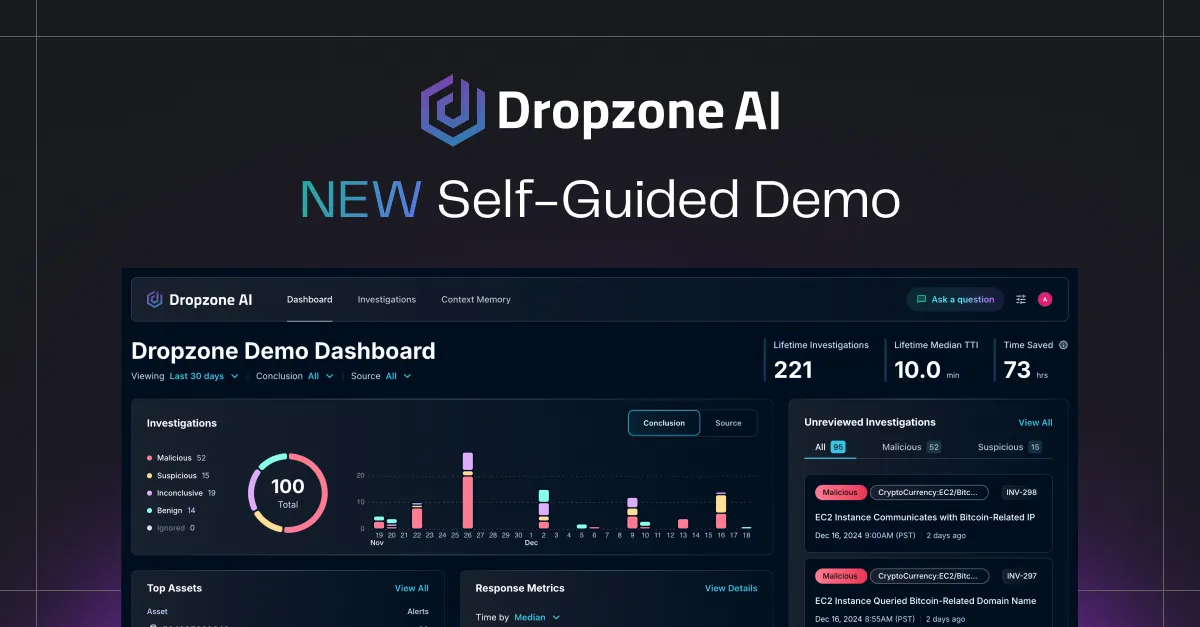
See Dropzone's AI SOC Analyst in action. Explore our self-guided demo and see how AI-powered investigations can transform your team's efficiency, accuracy, and confidence in every alert.
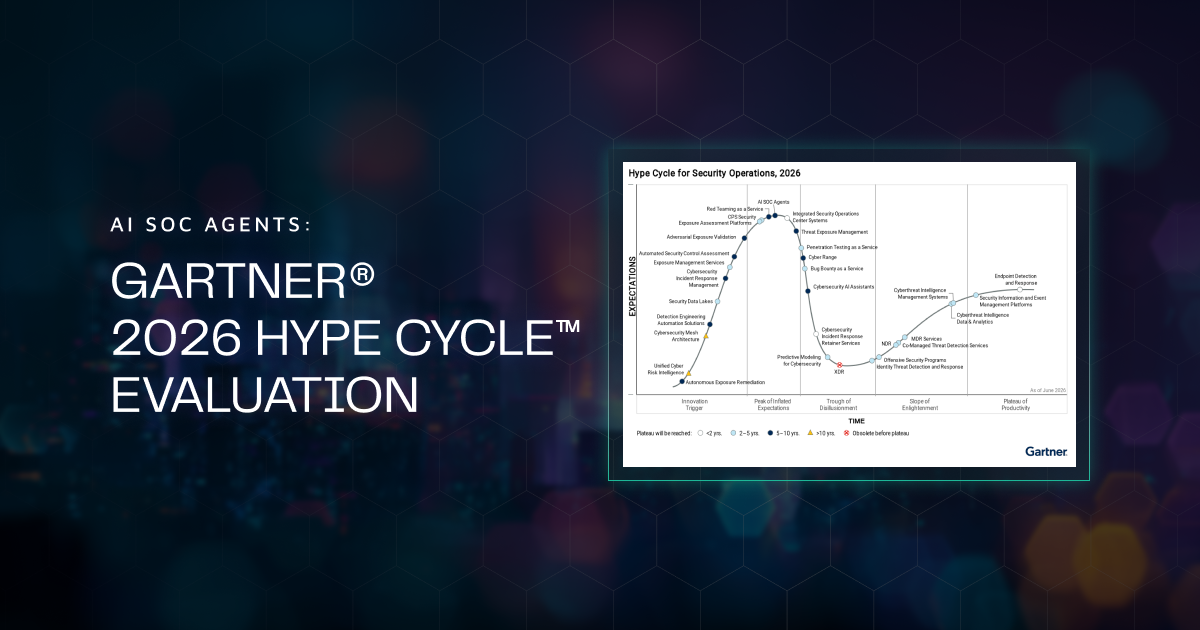
Read the report here: Gartner Innovation Insight: AI SOC Agents (October 2025)
Our Key Takeaways
- AI SOC agents are maturing rapidly. 2025 Gartner Innovation Insight signals that AI augmentation in security operations has moved from concept to practical adoption.
- Augmentation beats automation. AI SOC agents enhance human expertise rather than replace analysts, automating repetitive tasks while improving investigation quality.
- Benefits are measurable. Organizations see reduced workloads, standardized investigations, improved alert fidelity, and faster decision-making.
- Success requires maturity and oversight. Clear goals, human-in-the-loop validation, and measurable pilot programs are prerequisites for effective implementation.







.png)