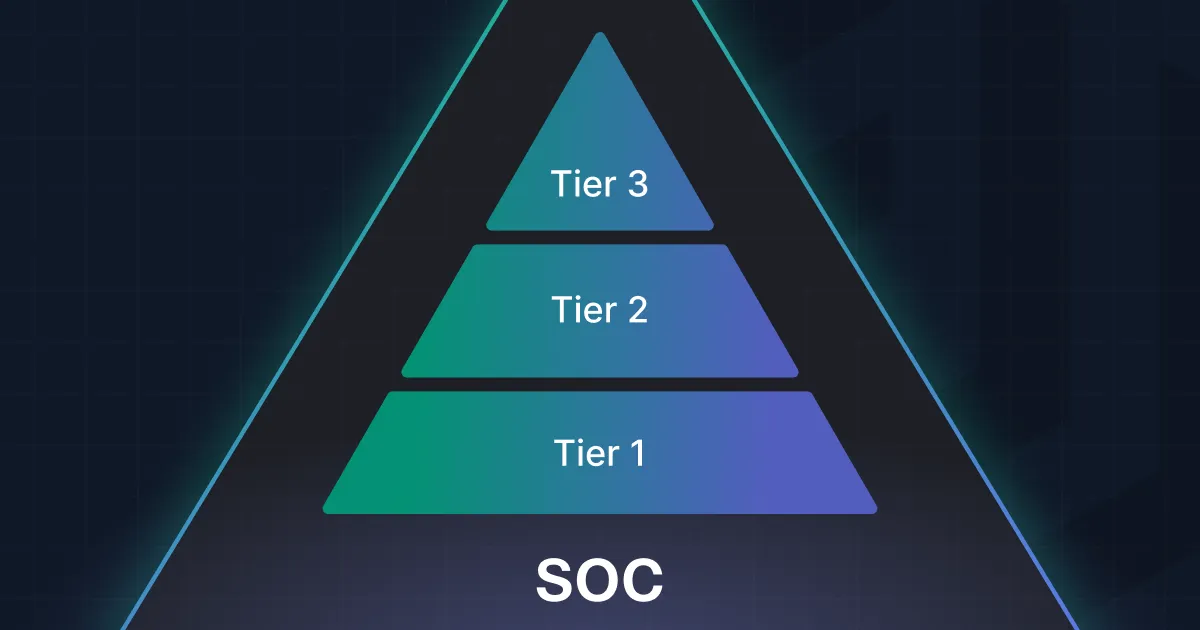

Security Operations Center (SOC) teams often divide responsibilities among Tier 1, 2, and 3 analysts. Each level has its distinct duties and expertise, but all of them face the challenge of managing growing workloads with limited resources. This post explores how AI SOC analysts, like Dropzone AI, can complement and enhance the work of human analysts at each tier.
What is the SOC?
At its core, the SOC continuously monitors data from security tools and user reports, hunting for any signs of malicious activity. SOCs have become more widespread over the past 15 years as organizations adopted an “assume breach” mentality. It was in 2011 that Dmitri Alperovitch, then a VP at McAfee but who went on to co-found Crowdstrike, said, “There are only two types of companies—those that know they’ve been compromised, and those that don’t know.” Nowadays, organizations assume threats will slip past defenses, so they are always looking out for indicators of attack and compromise that can give them a head start on responding to an incident.
SOCs vary widely depending on the organization:
- Smaller organizations often rely on managed security service providers (MSSPs) for SOC support.
- Midsize organizations may have small, in-house teams handling multiple cybersecurity functions, including monitoring for threats, and they may outsource Tier 1 alert triage to a managed detection and response (MDR) provider or MSSP.
- Large enterprises usually have a fully staffed, internal SOC, often structured with defined roles for Tier 1, 2, and 3 analysts.
Let’s dive into what each of these tiers involves and how an AI SOC analyst can help.
Tier 1: Triaging Alerts
Tier 1 analysts are the front lines of the SOC. They’re responsible for managing the flood of security alerts, determining whether they’re worth investigating, and taking the first steps in response. Tier 1 analysts must perform tedious work for long stretches of time. The work can be taxing because of the high percentage of false positives, which can lead to “alert fatigue.”
The hours can also be challenging. For example, a 12-hour shift is common (e.g., 7 AM - 7 PM or 7 PM - 7 AM) on a 4 days on, 4 days off rotation. This junior role usually requires at least one cybersecurity certification such as CompTIA Security+ and knowledge of frameworks such as MITRE ATT&CK to classify the tactics and techniques of attackers.
Primary Responsibilities:
- Reviewing alerts generated by security tools, assessing whether they indicate a real threat
- Follow company playbooks when investigating different alert classes (phishing, identity, etc)
- Escalating alerts that require further investigation to Tier 2
- Escalating alerts that have strong indicators of malicious activity to Tier 3
- Addressing user reports of unusual activity, such as suspected phishing attempts
How Dropzone AI Helps: The Dropzone AI SOC Analyst investigates every alert end to end and delivers a verdict with the evidence attached. That shifts Tier 1 work from clearing a triage queue to reviewing concluded investigations. Analysts confirm or challenge each verdict, handle the exceptions that need human judgment, and put their hours into confirmed threats instead of false positives. Across deployments, customers see a 95% reduction in manual alert investigation on average.
The learning effect matters as much as the time. The AI SOC Analyst documents every step of its reasoning, so analysts starting out in the SOC review expert-grade investigations all day instead of working through raw alert queues. That exposure builds Tier 2 investigation skills faster.
Tier 2: Deeper Investigation
Tier 2 analysts handle the escalated alerts that require more thorough investigation. These individuals usually have a few years of experience under their belt and often possess advanced skills for things like putting together timelines of events, interpreting malware sandbox reports, and root cause analysis. Their primary role is to determine whether a flagged incident is a genuine security issue and, if so, how severe it is.
There are fewer Tier 2 analyst positions out there. The ratio between Tier 1 and Tier 2 analysts typically depends on the size of the SOC. In smaller SOCs, it might be 2:1 or 3:1 but in larger SOCs it might be 5:1. Tier 2 analysts are often expected to provide mentorship and help build the skills of Tier 1 analysts.
Ultimately, Tier 2 analysts are looking for any type of incident. They can remediate and close up common incidents, such as user account compromise and common malware execution. Anything involving an advanced attack (lateral movement, ransomware, cloud infrastructure compromise, multi-account compromise from a phishing campaign), is escalated further. If those types of attacks are identified, the Tier 2 analyst will engage the computer security incident response team (CSIRT) that includes Tier 3 analysts as well as representatives from IT, legal, PR, and customer support.
Primary Responsibilities:
- Dig into escalated alerts with advanced tools to confirm whether an attack actually occurred
- Investigate the root cause of security incidents and assess their scope—whether sensitive data was accessed, for example
- Extract indicators of compromise (IOCs) that can be used to enrich detections or be shared with information sharing and analysis centers (ISACs)
- Collaborating with other teams to confirm details needed during investigations
- Writing up detailed reports on their findings and, if needed, escalating the issue to Tier 3
How Dropzone AI Helps: Tier 2 analysts pick up escalations that arrive already investigated. Each case comes with a verdict, the evidence behind it, and a documented trail of what the AI SOC Analyst checked, so the analyst starts briefed instead of rebuilding context from raw logs. When a case needs more digging, analysts ask follow-up questions in natural language and get answers pulled straight from connected security tools, with no query languages or schema knowledge required. In the Pipe case study, escalated investigations completed 90% faster.
Tier 3: The Specialists
Tier 3 analysts are the experts who step in when a serious incident is confirmed. To be clear, there’s not many people with “Tier 3 analyst” in their job title. More often, these are senior security engineers who join in incident response when needed. They’re responsible for analyzing incidents in depth, determining how attackers infiltrated the system, and working with incident response teams to contain and remediate the threat. These analysts are highly skilled, often with years of experience in forensics and incident response.
For P1 incidents that have a serious impact, the company may also bring in outside consultants to help with incident response.
Primary Responsibilities:
- Conducting detailed forensic investigations on confirmed security incidents
- Assessing the scope of a breach and understanding the attackers’ methods and objectives
- Identifying gaps in security controls and making recommendations for improvements
- Working with legal, PR, and customer service teams during incidents that require a coordinated response
Their investigations often come under pressure to produce quick and accurate answers, especially as regulatory requirements (such as the disclosure requirements from the SEC) and customer demands for transparency increase.
How Dropzone AI Helps: Tier 3 specialists get hours back in two places. During incident response, investigations escalated by the AI SOC Analyst already contain the user permissions, historical activity, and surrounding event context that forensic work starts from, so specialists begin with the evidence organized. For proactive threat hunting, the AI Threat Hunter agent, now in beta, runs autonomous threat hunts from hypotheses the team defines. Indiana Farm Bureau reported compressing up to 40 hours of threat hunting work into about one hour.
How AI Changes the Work at Each Tier
The tier structure is not going away in 2026. What changes under the agentic SOC model is where each tier spends its hours.
- Tier 1. The triage queue becomes a verdict queue. Analysts review completed investigations, confirm or challenge the conclusions, and handle the exceptions that need human judgment. AI oversight becomes a core entry-level skill, and daily exposure to complete investigations moves people along the SOC analyst career path faster.
- Tier 2. Escalations arrive pre-investigated, with evidence and a documented reasoning trail. Analysts spend more time validating findings on high-stakes alerts, correlating activity across cases, and improving detections, and less time rebuilding context from raw logs.
- Tier 3. Senior specialists recover hours for the work that always got squeezed out. Threat hunting moves from an occasional project to a regular practice, and forensic investigations start from organized evidence rather than scattered queries.
None of this removes people from the loop. AI agents investigate and escalate. Analysts own the verdict reviews, the response decisions, and the strategy. Dropzone elevates people, it doesn't replace them.
Conclusion: AI and the Future of the SOC
The three-tier structure still organizes SOC work in 2026. What AI changes is the daily reality inside each tier. Tier 1 analysts review evidence-backed verdicts instead of grinding through a raw queue. Tier 2 analysts start every case briefed. Tier 3 specialists get real hours back for hunting and forensics. AI agents investigate, analysts decide, and every tier moves up a level.
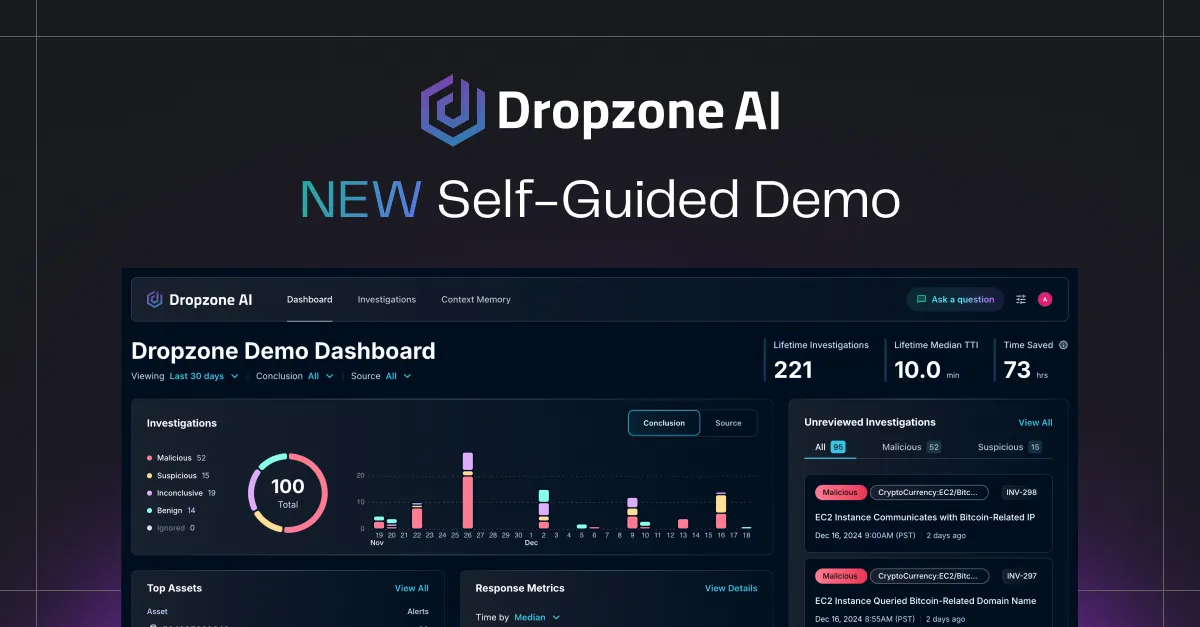
Want to see what verdict review looks like in practice? Take the self-guided demo and watch the AI SOC Analyst investigate real alerts end to end.





.png)