

The Limitations of SOAR and the Rise of AI in Security Operations
Alert overload continues to overwhelm Security Operations Centers (SOCs), with analysts facing thousands of daily notifications. While SOAR (Security Orchestration, Automation, and Response) promised to solve this crisis, it has fallen short of expectations. AI SOC analysts now offer a more effective alternative that addresses SOAR's fundamental limitations without requiring complex playbooks or specialized coding skills.
Key takeaways:
- SOAR has reached obsolescence according to Gartner's 2024 ITSM Hype Cycle
- AI SOC analysts require no playbooks or coding, unlike traditional SOAR
- Organizations using AI-powered alert investigation report significant time savings
- Dropzone AI offers seamless integration with existing security tools and autonomous triage capabilities
What Is SOAR (Security Orchestration, Automation, and Response)?
SOAR is a category of security software that connects the tools in your stack and executes predefined workflows, called playbooks, in response to alerts and triggers. A playbook encodes a response your team has decided on in advance. Enrich this indicator, open a ticket, disable that account once an analyst confirms the compromise, notify the on-call channel. SOAR is a tool a SOC operates, not a security operations model in itself.
SOAR earns its keep on deterministic work. It is good at:
- Orchestrating actions across the stack (SIEM, EDR, email, ticketing) from one place
- Executing repeatable, human-approved response steps the same way every time
- Codifying notification and compliance workflows that must follow a fixed sequence
Where SOAR strains
The structural costs show up after deployment, and they compound:
- Playbooks only cover what you predicted. An alert that matches no playbook waits for a human, and most investigation work is exactly that kind of alert.
- Playbooks are an engineering commitment. Creating and maintaining them takes security automation engineers, a skill set in short supply, and the operational knowledge walks out the door when staff changes.
- The maintenance never ends. Every detection change, tool swap, and new threat pattern means manual playbook updates.
- Integration is real work. Custom connectors, configuration, and tuning stretch deployment timelines and add hidden cost beyond the license.
None of this makes SOAR a bad investment. It makes SOAR a scripted one, and scripted automation has a ceiling. We cover that ceiling in depth in our breakdown of the limits of SOAR playbooks.
What Is an AI SOC Analyst?
An AI SOC analyst is an AI agent that investigates security alerts the way a human analyst would. It reads the alert, forms a hypothesis, queries the surrounding systems for evidence, and reasons over what it finds until it can deliver a verdict, true positive or false positive, with the evidence attached. It needs no playbooks and no code, because it works out the investigation steps from the alert's context instead of following a script.
How AI SOC analysts work without playbooks
In practice, AI SOC analysts:
- Decide investigation steps from the alert's context rather than a predefined sequence
- Adapt the approach to each alert, including alerts no playbook anticipated
- Learn an organization's environment over time from analyst feedback and added context
- Document every query, finding, and conclusion in an evidence-backed investigation report a human can verify
The last point matters as much as the autonomy. The output is not a black-box score. It is a written investigation an analyst can check, which is what makes the verdict usable for a decision.
What that changes for scale
Because investigations no longer queue on human availability, alert volume stops dictating the headcount math. Teams that use AI SOC analysts to handle increasing alert volumes see the same pattern. Investigation coverage goes up, and analyst time moves from repetitive triage to confirmed threats, detection tuning, and threat hunting. The point is not fewer analysts. It is analysts spending their hours on judgment instead of repetition, with no playbook library to feed along the way.
SOAR vs AI SOC Analysts: The Differences That Matter
The two are easy to conflate because both promise automation. They automate different things. SOAR automates response execution. AI SOC analysts automate investigation. Here is where SOC teams feel the difference:
| SOAR | AI SOC analysts | |
|---|---|---|
| What it automates | Response and orchestration steps defined in playbooks | Alert investigation, from triage through an evidence-backed verdict |
| Handling a novel alert | Waits for a human or a new playbook | Investigates it, adapting steps to the alert's context |
| Setup and upkeep | Playbook design, coding, connectors, ongoing tuning | No playbooks to build. Learns the environment from context and feedback |
| Skills required | Automation engineering and scripting | Analyst review of AI findings. No programming |
| How it improves | Manual playbook updates | Continuous learning from history and analyst feedback |
| Role in the SOC | Execution layer for decisions already made | Investigation layer ahead of human decisions |
Is this the same question as SOC vs SOAR?
No. A SOC (security operations center) is the team and function that defends the organization. SOAR is one tool that team can run. When people compare "SOC vs SOAR," the real question is what the tool adds to the team, and the answer is orchestration and scripted response. The closer call, and the one this page compares, is between two automation approaches a SOC can adopt for its alert workload, scripted playbooks or autonomous investigation.
What about AI-powered SOAR?
SOAR vendors now ship AI features, including assistants that draft playbooks and summarize cases. Those features reduce the playbook-writing tax, and they are worth having if you keep a SOAR. They do not change the architecture. An AI-assisted SOAR still runs on playbooks. A human (now with AI help) defines the workflow, and the platform executes it. An AI SOC analyst starts from the other end and performs the investigation itself, with no workflow to define. If your goal is cutting the analyst workload tied up in investigation rather than speeding up playbook authorship, the architectural difference is the one to evaluate.
Where does MDR fit?
MDR (managed detection and response) is a service. A provider's analysts run detection and response operations for you, usually on the provider's tooling. SOAR is software your team operates. An AI SOC analyst is software that investigates inside your environment while your team keeps the decisions. For a mid-sized company weighing all three, the practical split is who does the work and where the context lives. MDR puts both with the provider, and it remains a strong fit when running any of this internally is not on the table. SOAR keeps the work in-house and automates the scripted parts. AI SOC analysts let teams that want more control bring Tier 1 alert investigation in-house without the headcount math that used to require.
When to Run SOAR, AI SOC Analysts, or Both
Choose based on the work you need automated, not the category label.
SOAR fits when the work is deterministic. If your team executes the same approved sequence every time, a playbook runs it reliably and leaves an audit trail. Containment steps an analyst has signed off on, ticket creation, notification chains, and compliance workflows all stay good SOAR territory.
AI SOC analysts fit when the bottleneck is investigation. If alerts queue because each one needs evidence gathered, context checked, and a judgment formed before anyone can act, that is investigation work, and scripted playbooks were never built for it. An AI SOC analyst takes that work end to end and returns a verdict your team can act on.
Running both is common, and the handoff is clean. AI SOC analysts investigate every alert and deliver verdicts with the evidence attached. Confirmed threats escalate to your analysts, who decide the response, and SOAR executes the response steps they approve. The investigation layer and the execution layer complement each other rather than competing for the same job, so an AI SOC analyst is an addition to the stack you own, not a forced migration off it. For the integration specifics, including how the handoff works with your SIEM, SOAR, and ticketing, see how AI SOC analysts and SOAR automation work together.
Weighing Alternatives to SOAR: Five Evaluation Criteria
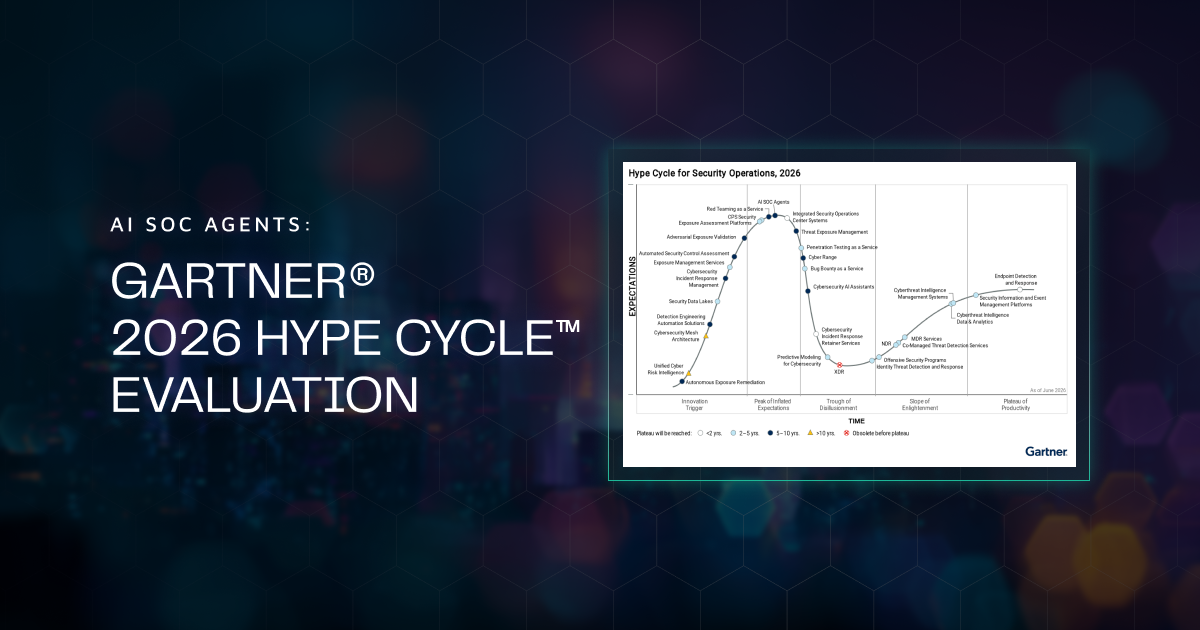
Many teams reading this are not choosing a first automation tool. They are asking whether the SOAR they own is still earning its maintenance bill. The market context is real. Gartner's 2024 Hype Cycle for ITSM placed SOAR in the Trough of Disillusionment and projected it would become obsolete before reaching productive maturity. The honest takeaway is narrower than the headline, though. Scripted orchestration still does deterministic work well. The question worth evaluating is whether scripted automation alone still fits an alert workload that keeps changing.
Five criteria do most of the work when you evaluate an AI SOC analyst, an AI-assisted SOAR, or any other option against what you run today:
1. Coverage of investigation work. What share of alert investigation does it take end to end, and what does it hand back to your analysts?
2. Maintenance burden. Who builds and updates the automation when detections, tools, or threats change, and what does that cost each year?
3. Time to value. Days until the first useful verdict, not weeks until deployment is declared done.
4. Evidence quality. Can your analysts see how the system reached its conclusion and verify it themselves?
5. Fit with what you own. The strongest options complement existing investments, including a SOAR you keep for orchestration, rather than forcing a rip-and-replace.
Published results give the criteria teeth. Zapier's security team measured an 85% reduction in manual alert investigation after deploying an AI SOC analyst, Pipe measured 90% faster escalated investigations, and the Indiana Farm Bureau and Pipe case studies measured 5x faster MTTR. When you benchmark options yourself, measure investigation speed with mean time to conclusion (MTTC) rather than response-only metrics, and check the rest of the measured results in our customer case studies.
Michael Kuchera, Manager, Security Detection and Response at Zapier, put the architectural difference plainly:
"Dropzone AI stood out because it worked like an analyst, not a rules engine. Unlike other automation tools, it isn't a black box; analysts can see every query it runs and every piece of evidence it gathers, which builds trust in the results."
For a structured walkthrough of running this evaluation, including what to test in a proof of concept, see how to evaluate an AI SOC analyst. The AI SOC buyers guide packages the criteria in checklist form.
How Dropzone AI Fits
Dropzone AI builds the AI SOC Analyst, an AI agent that is generally available today and investigates every alert end to end. It connects to the tools you already run through 90+ integrations, works without playbooks or investigation code, and uses Recursive Reasoning, an iterative, evidence-following investigation method, instead of executing a fixed script. Every investigation ends in a verdict with the full evidence trail, and confirmed threats escalate to your analysts for response through the workflows you already trust, including your SOAR playbooks.
Dropzone AI is a Gartner Cool Vendor for the Modern SOC. If you are comparing Dropzone AI directly against the SOAR platforms you run or are evaluating, we keep a separate breakdown of how Dropzone AI compares to SOAR platforms.
The Bottom Line
SOAR and AI SOC analysts solve different problems. SOAR executes the response steps your team has already decided on. AI SOC analysts take on the investigation work that comes before those decisions and back every verdict with evidence. Teams getting the best results treat them as layers rather than rivals, and hold any new option to the five evaluation criteria above. For the longer story of how SOC automation reached this point, read our breakdown of the evolution from SOAR to the agentic SOC.
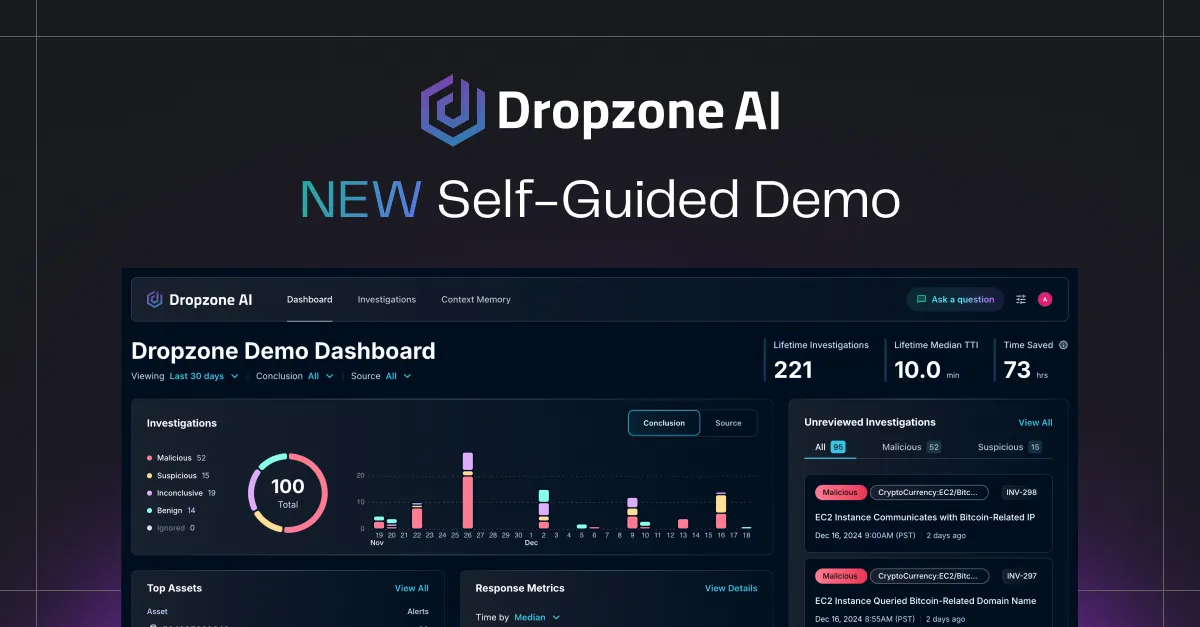
See the investigation layer for yourself. Watch the AI SOC Analyst work real alerts in the self-guided demo, or schedule a demo with our team.











.png)