

Threat detection and threat hunting sound interchangeable. They are not. Detection is the automated system that fires when something matches a known pattern. Hunting is the analyst-driven search for threats that already bypassed those patterns. One runs 24/7 without human input. The other requires a skilled investigator with a hypothesis, time, and access to data.
The distinction matters because most SOC teams invest heavily in detection and underinvest in hunting. Understanding what each discipline actually delivers, and where each one falls short, is the first step toward building a proactive security program that covers both sides.
What is the actual difference between threat hunting and threat detection?
Threat detection is reactive and rule-based. Threat hunting is proactive and hypothesis-driven. Both are essential, but they operate on fundamentally different models.
| Threat Detection | Threat Hunting | |
|---|---|---|
| Approach | Reactive, rule-based | Proactive, hypothesis-driven |
| Trigger | Automated alerts from predefined rules | Analyst-initiated investigation |
| Scope | Known attack patterns and signatures | Unknown, novel, or stealthy threats |
| Speed | Real-time, 24/7 at machine scale | Hours to days per investigation |
| Human input | Minimal (rule creation and tuning) | High (hypothesis, analysis, judgment) |
| Primary tools | SIEM, EDR, IDS/IPS | Log analysis, threat intelligence, endpoint telemetry |
| Weakness | Blind to novel techniques | Labor-intensive, hard to scale |
Threat detection identifies known threats automatically
Detection tools (SIEMs, EDR platforms, IDS/IPS) monitor your environment continuously for activity that matches predefined rules, signatures, or behavioral baselines. When an endpoint process matches a known malware signature or a network connection triggers a correlation rule, the system generates an alert.
The strength of detection is breadth and consistency. It operates at machine speed, 24/7, across every monitored asset. The weakness is that it can only find what it has been told to look for. Novel attack techniques, living-off-the-land binaries, or adversaries using legitimate credentials will not trigger rules that were never written for those patterns.
Threat hunting searches for what detection missed
Threat hunting starts with a hypothesis: "Based on recent threat intelligence, an attacker may be using PowerShell remoting for lateral movement in our environment." The analyst then queries logs, inspects endpoint telemetry, and follows the evidence wherever it leads.
Hunting operates under the "assume breach" mindset. It does not wait for an alert. It proactively searches for indicators that an adversary is already present, testing hypotheses against real data. This is how organizations find zero-day exploitation, supply chain compromises, and long-dwell-time intrusions that automated detection never flagged.
The weakness is cost. Hunting is labor-intensive. It requires skilled analysts with deep knowledge of attacker techniques, and it requires dedicated time that most SOC teams struggle to protect.
Why do SOC teams need both approaches?
Detection handles the volume. Hunting handles the stealth. Neither alone is sufficient, and the data makes the gap clear.
Detection handles volume, hunting handles stealth
85% of SOCs rely on endpoint security alerts as their primary response trigger (SANS 2025). That means detection is doing its job for the known-threat category. Alerts fire, analysts triage, and the process works at scale for threats that fit established patterns.
But attackers who use legitimate tools, stolen credentials, or novel techniques bypass those patterns entirely. They move through environments without generating the signatures that detection tools are watching for. These are the threats that sit undetected for months, and they are the ones that cause the most damage.
Detection provides the data foundation. Hunting uses that data to ask questions the detection rules never anticipated.
The cost of relying on detection alone
Organizations take an average of 241 days to identify and contain a breach (IBM 2025). That window exists because automated detection missed the initial compromise or failed to correlate the early signals into an actionable alert.
94% of cybersecurity leaders say AI is the most significant driver of change in cybersecurity (WEF 2026), yet the detection-only model cannot keep pace with the speed at which attack techniques evolve. New tactics appear faster than detection rules can be written. Proactive hunting compresses dwell time by finding threats before they detonate, turning months of silent compromise into days or hours of active investigation.
What makes threat hunting so difficult to scale?
Hunting requires three things in short supply: skilled analysts, dedicated time, and broad data access. When any one of these is missing, hunting programs stall or never launch.
Skill gaps and time pressure limit most programs
48% of SOCs describe their threat hunting as only partially automated using vendor tools (SANS 2025). The rest is manual. That means an analyst is writing queries, correlating results across tools, and documenting findings by hand, all while the alert queue continues to grow.
The staffing picture makes this worse. 48% of cybersecurity professionals report exhaustion staying current with threats and emerging technologies, and 47% feel overwhelmed by workload (ISC2 2025). Analysts stuck triaging routine alerts have little time left for proactive hunts. Only 30% of SOCs have AI/ML as a formally defined part of SOC operations (SANS 2025), meaning most teams lack the automation that would free capacity for hunting.
AI-augmented alert triage creates capacity for hunting
When AI handles routine alert investigation, analysts reclaim hours that were previously spent on repetitive triage. Those hours become available for the work that requires human judgment: building hypotheses, testing them against live data, and identifying threats that no automated system flagged.
The Agentic SOC model pairs AI execution with human-directed hunting. AI agents investigate alerts at machine speed, completing investigations in minutes rather than hours. Analysts shift from doing the triage to directing the hunt, focusing their expertise where it has the highest impact. That recovered capacity is what makes sustained proactive threat hunting possible.
How do threat hunting and threat detection work together?
The two disciplines form a feedback loop. Detection flags initial signals. Hunting validates and deepens the investigation. Findings from hunts improve future detection rules, closing gaps over time.
The detection-hunting feedback loop
Every successful hunt produces intelligence that strengthens detection. When a hunter identifies a new lateral movement technique, that finding becomes a detection rule. When threat intelligence reveals a new adversary TTP, it feeds both processes: enriching alerts with context and guiding hunters toward specific hypotheses.
Mature SOC teams measure success by how quickly hunts produce durable detections. A hunt that discovers a novel attack pattern is valuable. A hunt that discovers a pattern and generates a detection rule that catches it automatically next time is what builds a compounding security advantage.
Building a balanced SOC program
- Automate routine alert triage to free analyst capacity. When 85% of alerts come from endpoint detection (SANS 2025), that is the highest-volume category and the one where AI-augmented investigation delivers the most time savings.
- Dedicate recovered time to structured, hypothesis-driven hunts. Use threat intelligence to guide where your team looks first. Focus on the threat patterns that automated detection is least equipped to catch.
- Feed hunt results back into detection engineering, turning one-time discoveries into permanent coverage. Every successful hunt should produce a new detection rule.
This cycle is how organizations build proactive threat hunting programs that scale.
Key takeaways
- Threat detection is automated and reactive. Threat hunting is analyst-driven and proactive. They are complementary, not interchangeable.
- Both are essential. Detection handles volume and known threats. Hunting finds what detection misses, including zero-day techniques and living-off-the-land attacks.
- The biggest barrier to hunting is analyst time consumed by alert triage. When routine investigation takes all day, hunting never starts.
- AI-augmented alert investigation frees analysts to hunt more effectively, shifting them from reactive triage to proactive security.
Free your team to hunt
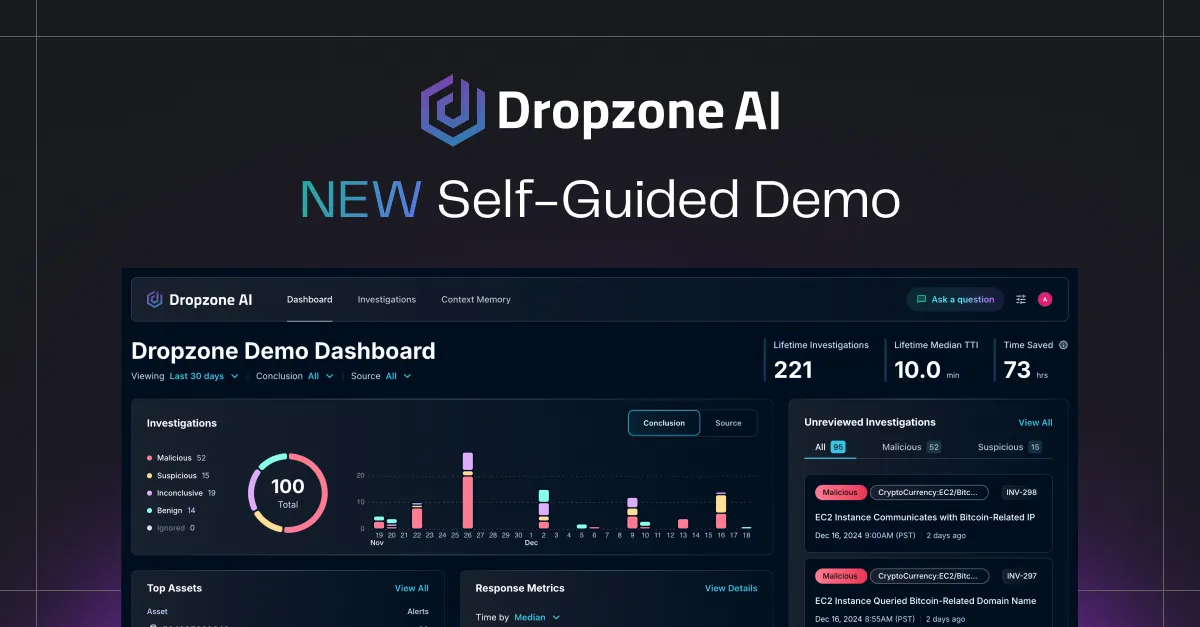
When routine alert triage consumes your analysts' day, proactive hunting never starts. Dropzone AI's Agentic SOC platform investigates alerts autonomously, completing investigations in minutes rather than hours and freeing your team to focus on the hypothesis-driven hunting that finds what automated detection misses.











.png)